What is this class about?
This class is about improving your writing and using it to tackle complex problems. It also introduces key questions literary professionals often explore.
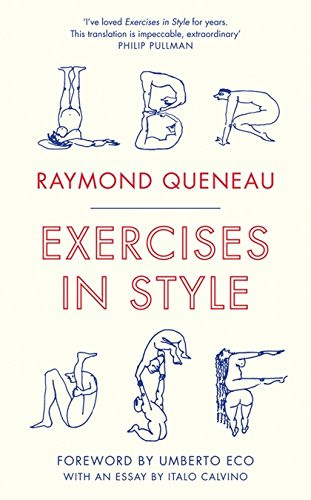
One inspiration for this semester is Exercises in Style by Raymond Queneau. In this book, Queneau tells the same simple story about a man in a new hat on the bus nearly 200 times, each in a different style. For instance, one version is told from the perspective of the hat-owner, and another version from the point of view of another bus rider. Another version focuses on describing colors, while another is written almost entirely in vulgar words and phrases.
For Queneau the writer, each version is a literal exercise he’s doing to strengthen his writing ability–the way a musician practices scales or a pushups build physical strength. It’s also a reminder that plots can be told different ways, and the most compelling version of a story might not be the most straightforward one.
We’ll borrow some of these ideas this semester to build your writing chops through revision and experimentation. In the first half of the semester we’ll study different version of folk tales and even write your own updated fairy tale. In the second half the semester we’ll read a novel that deals directly with story telling and versions of the truth, applying some of what we’ve learned about writing techniques from our studies of folk tales.
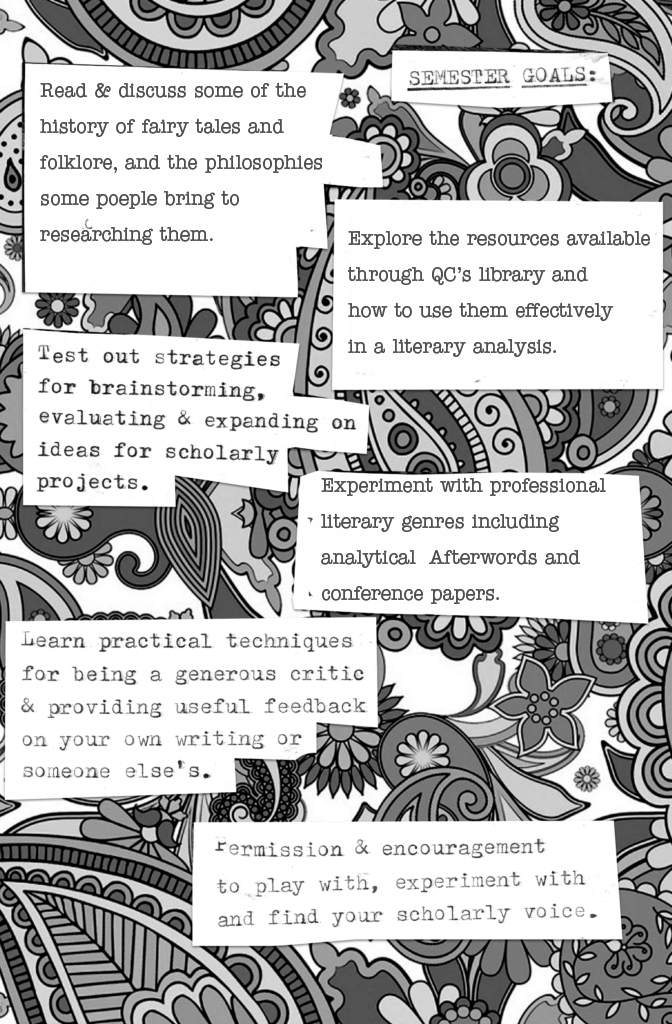
What goals do we have this semester?
Who is the instructor?
Name: Paul L. Hebert
Email: [email protected]
Office: Klapper 347
Office Hours
Mon./Wed., 11 A.M. – 12 P.M.
(or by appointment at other times via Zoom)

What do I need to bring to class?
Each class, you’ll need a writing utensil and some paper since I’ll often ask you to do short, in-class writing assignments that you’ll turn in. I don’t care if you tear out paper from your notebook for these quick assignments, though, so you can likely use whatever you use for class notes.
When we’re discussing a reading, it’s important that you have the reading in class so you can refer to it. Most readings are available from the RESOURCES page of this site (the password is hebert). Since these resources are digital, you’re welcome to bring laptop or tablet, but don’t let your devices distract you from classwork.
The one item you’ll need to purchase is the novel Mama Day by Gloria Naylor. There are several editions, all of which will be acceptable, and I suggest ordering a used print copy. There are some pirated digital copies available, but most have small inaccuracies that will cause confusion down the road (trust me on this!).
I also suggest getting the novel as soon as possible. If you have a reason you can’t purchase a copy in the first or two of class, please let me know.
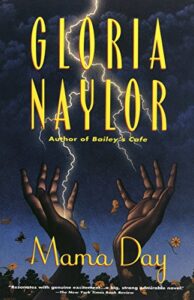
MAMA DAY
By Gloria Naylor
Any edition is acceptable, a print copy is preferred.

Watterson, Bill. Calvin and Hobbes. 11 Feb. 1993.
What do I need to do?
This class meets twice a week on Tuesdays & Thursdays for an hour and a half. During class time, you’ll write informal assignments, complete short activities, work in groups, engage in class-wide discussions, contribute to peer-reading groups, and occasionally participate in formal lectures.
Outside of class, you’ll read and annotate assigned texts, frequently write in a class journal, draft and revise two formal projects. Homework for this class should take you 2-3 hours a week.
Queens College requires that you receive a grade at the end of the semester, so we’ll use a simple equation to make it easy for us to keep track of your progress.
Your grade will have four parts, each worth 25% (Project 1 + Project 2 + Class Journal + Collaboration)

Watterson, Bill. Calvin and Hobbes. 21 May. 1992.
Project 1
This is a two part project. For Part 1, you’ll select a fairy tale from Children’s and Household Stories (1857) and adapt it for modern readers (you don’t need to change the time period, but you will be writing for a modern audience and so may need to explore inner motivations and psychology). Stories should be 1000+ words.
For part 2, you’ll write an Afterword to one of the stories written by your classmates. This Afterword is brief analytical essay that should have a creative and informative title, be well organized, make use of expository paragraph structure, and be ~1200 words.
Instead of subjective grades, you’ll have a list of tasks to complete. Some tasks will be basic (like formatting your references to fit MLA’s style guidelines), and some will be stages in the writing process, such as turning in a draft or commenting on someone’s else’s draft. You’ll know you’ve received full credit on the project when you can check off all the tasks.
Project 2
This is also a two part project. For part 1, you’ll convene a short conference on a theme related to the novel Mama Day with 4-5 classmates. For part 2, you’ll collect each of your conference papers in a special-topic journal.
By coming together, the conferences emphasize that the intellectual work we do is not just individual. How someone reads a sentence, or an idea they bring up, becomes something for you to think about, grapple with, and build on. If you choose to prepare closely with your group, sharing drafts ahead of the conference and maybe talking about details on a group chat, the whole process will be collaborative. But you can also kind of silo yourself off if you need. Everyone’s grade will be determined by their own work.
By choosing a topic (ideally broad, so each member can interpret it), you give cohesion to the conference (you’re all talking about similar ideas) and you give everyone a starting point. Most professional conferences begin with a “Call for Papers” (CFP), a kind of advertisement for academics to submit papers on a given topic. The best ones are chosen and they present. In your case, there’s no filtering for the “best” papers, but you’re still using the theme to find focus and connection.
For most people in the group, your contribution to the conference will be a a five minute presentation (1 page of double-spaced work takes about 1 minute to read). Your conference paper will go through rounds of feedback and revision so that you are confident when you present. You’ll also be asked a question by the conference facilitator after everyone’s read. Finally, you’ll have one more chance to revise your paper for collection in the special-topic journal.
Class Journal
Good readers are critical readers who ask questions of texts and about authors as they read. Not only does this type of reading aid basic recall, it also hones your critical skills. To help build those skills, you’ll keep a class journal over the course of the semester.
Your reading journal is a simple, double-spaced Google document, shared with your instructor, in which you write down ideas and questions sparked by class readings and discussion. It’s also a place to speculate and try out arguments before you have to write longer, more formal essays.
More than any particular entry, the habit of writing down your thoughts is key to getting full credit. There will be twenty prompts during the semester, to receive full credit you only need to complete 10 (roughly one a week). To maximize the benefit of this journal writing to our in-class discussion, late entries will not be counted without expressed permission (there’s no reason writing a journal entry to prepare for a class discussion that’s all ready happened).
To make the most of your journal and receive full credit, write 250+ words each entry, about a page, double-spaced. (It takes your brain at least 100 words to get really thinking and it’s important to push beyond the first few easy-to-reach ideas, since the most interesting discoveries are rarely the easiest).
Treat your journal as a space for something like stream-of-consciousness thinking, rather than carefully refined prose, with the bottom of the page a good “stopping point.” It’s okay to occasionally have shorter entries as long as all the entries taken together demonstrate a thoughtful journaling habit.
To help encourage you to experiment in your journal, you will not be graded on the content.
Collaboration
You’ll need to come to class and be prepared to collaborate, but collaborating is also more than having your body present and doing in-class assignments.
Examples of good collaboration include jumping off someone else’s thought in a discussion, making a suggestions to spark discussion or change the format when the discussion seems to come to a standstill, bringing in someone from home you remembered after a discussion, helping a classmate out with notes they missed, or reading over a friend’s paper and giving them feedback before it’s due.
Over the semester I’ll take notes after each class to refresh my memory at the end of the semester, but you should also keep a record of your good work.
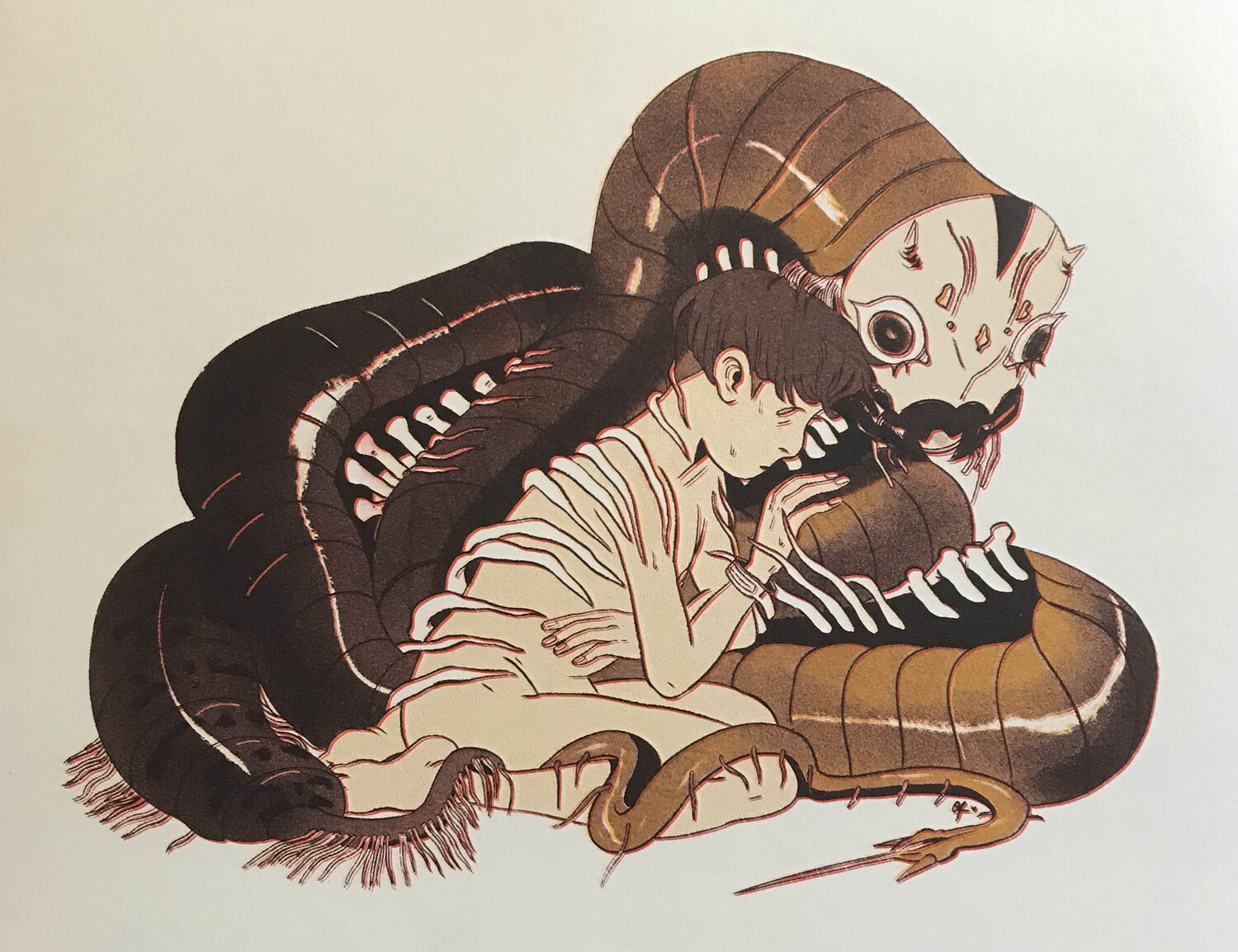
Fields, Olivia. Bloodchild. Risograph. https://www.ohfields.com, 2023.
How do I do well in this class?
Building writing skills is similar to building strength: regular practice and exercise is needed to see results, and results are often achieved in fits and starts rather than a linear progression. For this reason, your assessment in this class will emphasize the writing process and critical reflection over final products. This will be achieved with a method called “spec grading.”
With spec grading, assignments have a list of tasks and are essentially Pass/Fail (although we’ll use the words Accepted and Needs Work). The two major projects will have a list of tasks to be completed over several weeks.
Borrowing from a method of assessment called “ungrading,” you’ll receive detailed feedback at each stage of a project, and you’ll complete a guided self-reflection at each project’s completion. Revisions are always allowed (until the day all work is due).
The minimum requirements for a A in this class are (lowest passing grade):
- All Project I and Project II tasks completed and accepted;
- 10 Reading Journal assignments completed and accepted with 250+ words per entry;
- Participation in both Peer Review activities;
- Prepared, on time, and participating in at least 20 classes (roughly 70% of of the semester).
The minimum requirements to pass this class are (a D grade):
- All Project I and Project II tasks completed and accepted;
- 3 Reading Journal assignments completed and accepted with 250+ words per entry;
- 2 additional Reading Journal assignments completed and accepted with 150+ words per entry;
- Participation in one Peer Review activity (unless excused);
- Prepared, on time, and participating in at least 10 classes (roughly 30% of of the semester).
What Resources are available?
Writing Center
The Writing Center helps you put together stronger, more effective writing. You can work with tutors on everything from the smallest pieces of writing to final projects. http://www.qc.cuny.edu/academics/wc/
Special Accommodation
The Office of Special Services (SPSV) is committed to supporting students with qualifying disabilities under the Americans with Disabilities Act (ADA) by providing reasonable accommodations to ensure equal access. If you have previously received accommodations due to a disability, believe you may have a disability, or have a temporary disability, please visit the office’s website (https://www.qc.cuny.edu/sp/) for further information on the assistance they can offer you. Accommodations are not retroactive, so you are encouraged to get registered sooner rather than later. You may also contact their office at [email protected] or call 718-997-5870 during office hours for assistance as well.
Title IX
Sexual misconduct (including sexual harassment, sexual assault, and any other non-consensual behavior of a sexual nature) and sex discrimination violate University policies. Know your rights, and please refer to the QC Title IX page more information, or seek assistance from your instructor.
Tentative Semester Schedule
1/27 – First Day/Intro
1/29 – “Little Red Riding Hood” (pp. 13-23); journal #1
2/3 – “Little Red Riding Hood” (pp. 1-13); journal #2; (introduction to Project 1 in class)
2/5 – “About the Priest with the Long Nose”; Project 1 story selection due; journal #3
2/10 – “The Nose” by Akutagawa; journal #4
2/12 – NO CLASSES
2/17 – NO CLASSES
2/19 – Project 1 Story draft due (peer review in class)
2/24 – “Adventure of a German Student” by Washington Irving; Journal #5
2/26 – [Comments Back]; “The Green Ribbon” by Alvin Schwartz; Journal #6
3/3 – “The Green Ribbon” by Carmen Miranda Machado; Journal #7
3/5 – Intro to Project 1 Afterword; Project 1 Story workshop
3/6* – Project 1 Story revision due; “Bloodchild” (incl. Preface and Afterword); Journal #7
3/10 – Project 1 Afterword selection due; Journal #8; How to write an afterword
3/12 – Intro to Mama Day by Gloria Naylor
3/17 – Project 1 Afterword draft due; Mama Day; Journal #8
3/19 – Project 1 Afterword Peer Review
3/24 – [Comments Back]; Mama Day; Journal #9
3/24 – Afterword Revisions due
3/26 – Mama Day; Journal #10
3/31 – Mama Day; Journal #11
4/2 – NO CLASS (Spring Break)
4/7 – NO CLASS (Spring Break)
4/9 – NO CLASS (Spring Break)
4/14 – Mama Day; Journal #12; Intro to Project 2
4/16 – Mama Day; Journal #13
4/21 – Mama Day; Journal #14; Introduction to conference papers
4/23- Group Work
4/28 – Mama Day; Journal #15
4/30 – Project 2 Call for Papers Due; Group Work
5/5 – Mama Day; Journal #16
5/7 – Mam Day; Journal #17
5/12 – Mama Day; Journal #18; (Suggested) Project 2 drafts due
5/14 – Mama Day; Journal #19
5/19 – LAST DAY OF CLASS; “Signs and Symbols”; Journal #20
5/23 Project 2 Conference Recording Due; ALL OTHER WORK DUE
5/25 ALL GRADES DUE
Plagiarism
Plagiarism is using or imitating the language or ideas of another author without acknowledging it, usually in the form of a phrase or citation. One example of plagiarism is copying passages from a source and using them in your writing without quotation marks or citation. Another example is incorporating another author’s ideas but changing the words, without acknowledgement.
If you plagiarize you risk receiving no credit for the assignment and failing the course. If you’re unsure whether the language you are using in your paper is someone else’s, include a citation as best you can to be safe, and contact your instructor with your questions.
Using Artificial Intelligence, like ChatGPT, without attribution counts as plagiarism, and these same policies apply.
Part of your development as a writer entails critically considering the appropriate use of AI writing tools, though. So keep an open line of communication with your instructor about your use of AI writing tools. Consult your instructor BEFORE using them in an assignment, and if you do use Chat GPT or other AI tools, cite them in your Works Cited page and be prepared to argue a rationale for the appropriateness of their use.

Silverstein, Shel. “Homework Machine.” Where the Sidewalk Ends, 1981.

